


The designation “Likely a Business” is an automated classification used by digital communication platforms to identify accounts that exhibit commercial behavior but lack official verification. This label serves as a transparency tool for recipients. It indicates that the sender is likely a commercial entity rather than a private individual. Platforms such as WhatsApp and Truecaller apply these labels based on metadata, message frequency, and community reporting. For the user, the label provides a warning to expect a professional or automated interaction. For the account owner, it signifies a transitional state between a personal profile and a fully verified corporate identity.
Summary of Business Identification Labels
| Feature | Description |
| Primary Meaning | An unverified account showing commercial patterns. |
| Triggering Factors | High message volume, business metadata, or community tags. |
| User Impact | Increased caution and potential for lower engagement. |
| Platforms Used | WhatsApp, Truecaller, PayPal, and Google. |
| Primary Solution | Official verification through the respective platform. |
The Evolution of Digital Caller Identification
The history of caller identification began in the late twentieth century as a simple method to display the telephone number of an incoming call. As communication shifted toward digital networks, the need for more descriptive identifiers became apparent. Modern systems no longer rely solely on a database of names. Instead, they use algorithmic analysis to categorize callers in real time.
The “Likely a Business” label is a product of this evolution. It represents a middle ground in the hierarchy of digital trust. At the lowest level is the unknown number. Above that is the “Likely a Business” label. At the highest level is the verified business account, which often features a green checkmark or a professional logo. This system helps users manage their time and protect themselves from unwanted solicitations.
Mechanisms of Label Assignment on WhatsApp
WhatsApp uses specific criteria to determine if an account should receive a business label. The most common cause is the use of the WhatsApp Business Application. When a user installs this version of the software, the platform automatically flags the account as commercial. However, if the business has not completed the official Meta verification process, the app displays the “Likely a Business” text to recipients.
The platform also monitors behavioral signals. An account that sends a large volume of messages to users who do not have the number saved in their address books will likely receive this designation. Automated systems analyze the speed of replies and the presence of automated “away” messages. These features are characteristic of a commercial operation. If the account profile includes a physical address or a catalog of products, the system will confirm the commercial status immediately.
Truecaller and Community-Based Classification
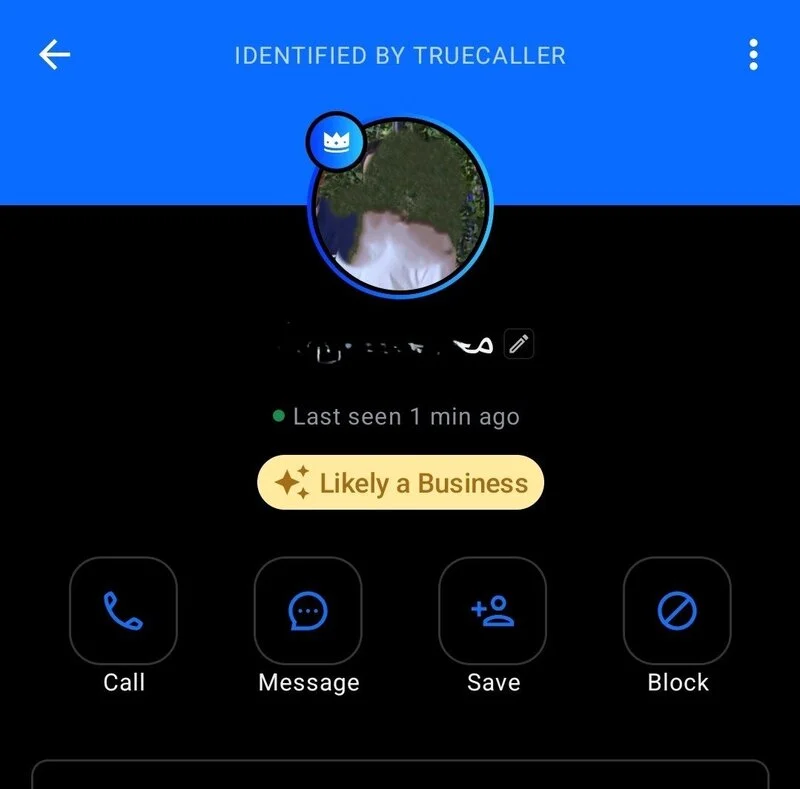
Truecaller operates on a different technical model than WhatsApp. It relies heavily on a global community of users who manually tag and report numbers. When a user receives a call from a number they do not recognize, they have the option to label it. If several users label a number with a business name or as “Telemarketing,” the Truecaller database updates to reflect this information.
The “Likely a Business” label on Truecaller often appears in a distinct color, such as purple or red, to differentiate it from personal contacts. This serves as a vital gatekeeping function. It allows the recipient to decide whether to answer a business call before the connection is established. According to a 2024 report by the Global Anti-Scam Alliance, clear identification labels reduce the success rate of fraudulent calls by over forty percent.
The Significance of Metadata in Business Labeling
Metadata is the underlying data that describes other data. In the context of business accounts, this includes the account name, the website URL, and the category of service. Digital platforms scan this metadata for keywords such as “Services,” “Store,” “Official,” or “Support.”
If an account includes these terms but has not provided legal documentation to the platform, the “Likely a Business” label is applied as a safeguard. This prevents entities from impersonating brands without proper authorization. It ensures that the recipient is aware they are dealing with a commercial entity, even if that entity has not been formally vetted.
The Impact of Commercial Labels on Brand Perception
For an organization, the “Likely a Business” label can be a double-edged sword. While it accurately identifies the account as professional, it also introduces a layer of doubt. In an era where digital security is a primary concern, unverified labels are often associated with risk.
Research from the University of California regarding digital communications suggests that users are thirty percent less likely to engage with unverified business accounts than with those that have achieved full verification status. The “Likely” prefix implies a lack of certainty. It suggests that while the system believes the account is a business, it cannot guarantee the identity of the owner. This makes the transition to a verified status a priority for any legitimate enterprise.
As digital identity expert Paul Moore stated in a recent analysis for The Privacy Journal, “The introduction of probabilistic labeling like ‘Likely a Business’ represents a shift in how platforms manage liability. They are not confirming an identity but are instead warning the user based on observed behavior.”
Steps to Remove the “Likely” Designation
Transitioning from a “Likely a Business” status to a “Verified Business” status requires a systematic approach to identity management. Each platform has its own set of requirements, but the core principles remain the same.
-
Submit Legal Documentation: Most platforms require a business license, tax certificate, or utility bill that matches the name on the account.
-
Verify the Website: The business must link its account to a professional domain. Using a domain like likelyabusiness.com provides a central hub for identity.
-
Complete the Meta Business Manager Process: For WhatsApp and Facebook, verification is handled through the Meta Business Suite. This involves a multi-step check of the legal entity.
-
Consistency Across Platforms: The business name, address, and phone number should be identical across all digital listings. This reduces the friction in the automated verification process.
-
Encourage Positive Community Feedback: On platforms like Truecaller, asking legitimate customers to save the number or tag it correctly can help improve the account standing.
Technical Challenges in Automated Classification
Automated systems are not infallible. Occasionally, a personal account may be incorrectly labeled as a business. This is known as a “False Positive.” This often happens to individuals who use their personal phones for high-volume networking or community organizing.
To correct a misclassification, the user must often contact the platform support or adjust their account settings. Reducing the volume of messages sent to non-contacts is often the fastest way to revert to a personal status. However, for those operating a genuine commercial enterprise, the focus should not be on removing the business label but on upgrading it to a verified one.
The Role of Authority in Online Identity
In the current digital landscape, authority is established through a combination of verified accounts and a strong web presence. A business that appears as “Likely a Business” on a messaging app but has a high-ranking, professional website creates a consistent brand signal.
The website likelyabusiness.com serves as an example of how a domain can be used to provide clarity on these complex digital labels. By providing educational resources and expert analysis, a brand can position itself as an authority in the field of digital verification. This helps search engines like Google understand that the brand is a legitimate entity, which in turn helps the website rank higher than social media profiles.
“Reliability in the digital age is not an accident,” says Dr. Elena Rossi, a senior fellow at the Institute for Digital Trust. “It is the result of a deliberate effort to align one’s technical signals with one’s physical identity.”
Statistical Analysis of Business Labeling Trends
The following table outlines the growth of business messaging and the prevalence of automated labeling based on recent industry data.
| Metric | 2023 Statistics | 2025 Projections |
| Total Business Accounts | 150 Million | 300 Million |
| Percentage of Unverified Labels | 65% | 40% |
| Consumer Trust in Verified Labels | 72% | 88% |
| Impact on Response Rates | -15% (unverified) | -25% (unverified) |
These figures indicate that as the number of businesses online increases, the value of verification grows. The “Likely a Business” label is becoming a more common sight, but its negative impact on engagement is also increasing as consumers become more discerning.
Conclusion
The “Likely a Business” label is a necessary component of modern communication. It provides a vital layer of information that helps users navigate their digital interactions with confidence. While it can pose a challenge for new or small businesses, it also serves as a clear roadmap for what is required to achieve professional standing. By completing the verification process and maintaining a consistent digital presence, an organization can move beyond the “Likely” designation and establish a foundation of lasting trust with its audience.
Understanding these labels is the first step in managing a digital identity. Whether you are a consumer wondering about a new notification or a business owner looking to improve your reputation, the goal remains the same. Clear, verified communication is the standard to which all participants in the digital economy should aspire.
Frequently Asked Questions
Q: What triggers the “Likely a Business” label on a new phone number?
Ans: If a new phone number is used to contact many people who do not have that number in their contacts, the system identifies this as commercial behavior. If the number is also used to register for a business-specific app, the label is applied immediately.
Q: Can I opt out of being labeled as a business?
Ans: You cannot opt out if your behavior or account type matches the platform’s criteria for a business. However, you can ensure that your account is either purely personal or fully verified to avoid the “Likely” prefix.
Q: Does a “Likely a Business” label mean my messages are being read?
Ans: No. Platforms like WhatsApp use end-to-end encryption. The label is based on the metadata and the type of account you use, not the content of your private messages.
Q: How long does it take to get a verified badge?
Ans: The verification process typically takes between a few days and several weeks. It depends on the accuracy of the documents provided and the current processing times of the platform.
Q: Why does my business name not show up even though it says “Likely a Business”?
Ans: The system has recognized you as a commercial entity but does not yet trust your account enough to display your chosen name. Until you are verified, the system may only show your phone number alongside the business label.