

Picture this: you’re halfway through a summer hike, the sun is beating down relentlessly, and sweat is dripping into your eyes. You reach for your handheld fan, only to realize you can’t cool down without stopping — and holding it means sacrificing the use of one hand entirely. Sound familiar? For millions of outdoor enthusiasts, this frustrating cycle of overheating and inadequate cooling solutions is an all-too-common reality.
Traditional portable fans, whether handheld, clip-on, or battery-powered desk models, were never truly designed for people in motion. They demand your attention, occupy your hands, and often run out of power before your adventure does. Enter the best neck cooling fan — a wearable, hands-free innovation that’s quietly redefining personal cooling for active lifestyles.
Unlike its predecessors, a top-tier neck fan delivers targeted airflow directly where your body needs it most, all without interrupting what you’re doing. Superior portability, whisper-quiet operation, and impressive battery life combine to create a cooling experience that conventional fans simply cannot match. In the sections ahead, we’ll break down exactly why the best neck cooling fan leaves every other portable option behind.
The Evolution of Portable Cooling: From Handheld to Hands-Free
Portable fans have come a long way since the days of simple battery-powered handheld units. Early designs were straightforward — a motor, a few blades, and a handle — but they demanded constant grip and attention, making them impractical for anyone actually moving around. Clip-on fans offered a slight improvement by attaching to hats, strollers, or tent poles, yet they still depended on a fixed surface and delivered airflow in only one direction. Desk fans went further in power but sacrificed any real portability in the process.
The core problem with all these designs is that they treat cooling as a stationary activity. When you’re hiking a trail, cycling through a park, or cheering at an outdoor event, stopping to hold a fan isn’t just inconvenient — it’s counterproductive. You generate more body heat the moment you set the fan down and start moving again. Traditional portable fans were essentially designed for people sitting still, not living actively.
The shift to wearable, hands-free neck fans represents a genuine breakthrough in how we think about personal cooling. By wrapping around the neck — one of the body’s most heat-sensitive areas — these devices deliver continuous airflow without requiring any hand involvement whatsoever. This design change isn’t cosmetic; it’s a fundamental rethinking of what a portable fan should do. For modern users who refuse to slow down, the neck fan doesn’t just improve on older designs — it makes them obsolete.
Key Features That Make the Best Neck Cooling Fan Stand Out
Portable and Hands-Free Design for Ultimate Convenience
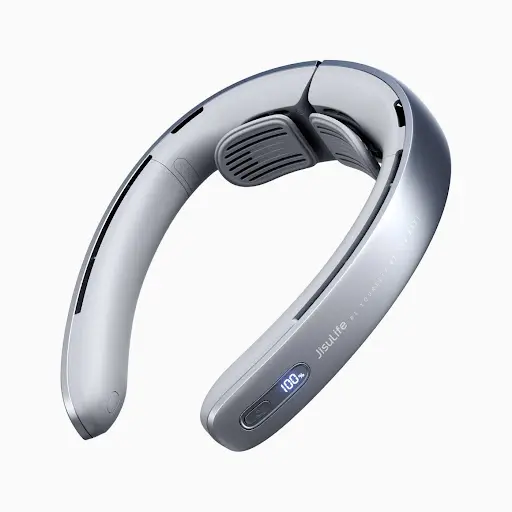
The defining advantage of a neck fan is its ergonomic U-shaped design that rests comfortably across your shoulders, leaving both hands completely free. Unlike handheld fans that require a constant grip or clip-on models that need a fixed attachment point, a neck fan moves with your body. Whether you’re swinging a golf club, pushing a stroller, or navigating a crowded festival, the fan stays in place without demanding any attention. Most quality models weigh under 200 grams — light enough that you’ll forget you’re wearing one. For outdoor enthusiasts who already carry gear, this lightweight wearability isn’t just a convenience; it’s essential.
Long Battery Life: Powering Through Extended Adventures
Battery life is where neck fans genuinely separate themselves from the competition. A quality neck cooling fan typically delivers eight to twelve hours of runtime on a single charge, while most handheld fans struggle past three to four hours under comparable conditions. Brands like JisuLife have pushed this further by pairing energy-efficient brushless motors with optimized battery management, so you can run through a full day of hiking, an outdoor concert, or an extended gardening session without reaching for a power bank mid-afternoon. When battery life is optimized alongside airflow output, you get a cooling device that actually lasts as long as your activity does.
Quiet Performance: Enhancing Outdoor Enjoyment
Noise is a surprisingly overlooked factor in portable fan design. Traditional desk and handheld fans can generate 50 decibels or more — roughly equivalent to a normal conversation — which becomes genuinely disruptive during quiet hikes, birdwatching, or outdoor meditation. Top-tier neck fans use bladeless or low-profile blade technology combined with vibration-dampening materials to operate at around 25 to 35 decibels, a whisper by comparison. This quiet performance means you can hold a conversation, listen to music through earbuds, or simply enjoy natural surroundings without a constant mechanical hum competing for your attention.
Addressing Outdoor Enthusiasts’ Needs with Practical Solutions
Reliable Cooling for Diverse Outdoor Activities
A neck fan’s true value reveals itself across the full spectrum of outdoor activity. Hikers benefit from consistent airflow that helps regulate core temperature on steep climbs, where stopping to use a handheld fan would break rhythm and momentum. Cyclists get targeted neck and face cooling without any aerodynamic interference. Gardeners working through humid afternoons can finally focus on the task at hand rather than pausing every few minutes to wipe down. Even spectators at outdoor sporting events — standing in packed, sun-baked bleachers — find meaningful relief when airflow is continuous rather than occasional. To maximize effectiveness, position the fan’s airflow nozzles slightly upward toward your jaw and cheeks, where blood vessels sit close to the skin. In particularly dry heat, a light mist of water on your neck before putting the fan on dramatically amplifies the cooling effect through evaporation.
Lightweight and Hands-Free: The Ideal Companion for Active Lifestyles
Beyond airflow, the physical design of a quality neck fan is engineered specifically for people who don’t stop moving. Flexible silicone frames conform to different neck sizes and adjust naturally as you turn your head or bend forward, eliminating the pressure points that make rigid accessories uncomfortable within minutes. The absence of straps, buckles, or clips means there’s nothing to readjust mid-activity. Carrying a handheld fan while managing trekking poles, a camera, or a leash isn’t just awkward — it’s genuinely limiting. A neck fan removes that constraint entirely, functioning invisibly in the background while you stay fully engaged in whatever you’re doing. For active users, this unobtrusive quality isn’t a minor perk; it’s the entire point.
Step-by-Step Guide to Choosing the Best Neck Cooling Fan
With dozens of neck fans on the market, narrowing down the right one requires a clear framework. Follow these four steps to make a confident, informed choice.
Step 1: Assess portability and comfort fit. Start by checking the fan’s weight and frame flexibility. A quality neck fan should weigh under 200 grams and feature a silicone or soft-touch frame that bends to accommodate different neck widths. Try bending the frame yourself — it should flex without resistance and return to shape without creasing. If you wear glasses or frequently tilt your head during activity, confirm the nozzle positioning won’t create pressure points against your jaw or shoulders.
Step 2: Check battery life specifications for long durations. Look for a minimum of eight hours of runtime at medium speed settings, which reflects real-world usage more accurately than maximum-speed ratings. Verify whether the fan supports USB-C charging, which allows you to top up from a power bank on the go. Fans that charge in under two hours offer a practical advantage during multi-day trips.
Step 3: Evaluate noise levels for quiet performance. Manufacturer decibel ratings aren’t always reliable, so look for independent user reviews that specifically mention noise during conversation or while wearing earbuds. Models rated below 35 decibels at medium speed are generally acceptable for most outdoor settings.
Step 4: Consider durability and additional features. Prioritize sweat-resistant or splash-proof construction if you plan to use the fan during intense activity or in humid conditions. Bonus features worth noting include multiple speed settings, a built-in LED indicator for battery status, and a travel pouch for protection during transit. JisuLife’s neck fan lineup, for instance, incorporates several of these practical details, making them a useful reference point when benchmarking what a well-rounded design looks like.
Why Neck Fans Outperform Other Portable Fans: A Comparative Analysis
Stack a neck fan against every other portable cooling option, and the differences become impossible to ignore. Handheld fans are the most obvious casualty — useful in theory, but they permanently occupy one hand and require you to consciously direct airflow rather than simply receiving it. The moment you need both hands for something else, the fan goes away entirely. Clip-on fans solve the grip problem but introduce a new one: they’re anchored to a fixed point, delivering airflow in a single static direction regardless of how your body moves. If you turn your head or shift position, the cooling benefit shifts with you — away from where you actually need it.
Desk fans, meanwhile, exist in a different category altogether. They deliver strong, consistent airflow, but only within a few feet of a power outlet. Calling them portable is generous at best. Battery-powered desk models fare slightly better, but their bulk and weight make them impractical for anything beyond a campsite table or a shaded bench.
Neck fans eliminate these trade-offs simultaneously. They stay positioned at one of the body’s most thermally sensitive areas — the neck and upper chest — regardless of movement or posture. They run silently enough to hold a conversation over. They last through a full day on a single charge. And they weigh so little that wearing one feels closer to wearing a light necklace than carrying a device. For outdoor enthusiasts who need cooling that keeps up with their pace rather than slowing them down, the comparison isn’t particularly close. The best neck cooling fan doesn’t just compete with other portable fans — it renders the entire category of stationary, hand-dependent cooling solutions functionally obsolete for active use.
The Future of Personal Cooling for Active Lifestyles
The case for the best neck cooling fan isn’t built on novelty — it’s built on solving real problems that every other portable cooling option has consistently failed to address. Throughout this article, we’ve seen how hands-free wearability eliminates the grip-and-go frustration of handheld fans, how extended battery life keeps pace with full-day adventures, and how whisper-quiet operation lets you stay present in the environments you actually came to enjoy. These aren’t incremental improvements; they represent a fundamentally better approach to personal cooling for people who refuse to stand still.
For outdoor enthusiasts — whether you’re hiking mountain trails, tending a summer garden, or cheering from sun-drenched bleachers — the neck fan delivers something no clip-on or desk model ever could: cooling that works with your lifestyle rather than against it. The lightweight, ergonomic design disappears into your activity while the airflow keeps doing its job, silently and reliably, hour after hour.
As wearable technology continues to evolve, personal cooling is only going to become smarter, more efficient, and more seamlessly integrated into how we move through the world. The best neck cooling fan available today is already a compelling glimpse of that future. If staying cool has ever cost you comfort, convenience, or freedom of movement, it’s time to make the switch.


